E60 Highway Lot 3 in Georgia Fully Opens to Traffic Georgian Prime Minister Attends Opening Ceremony
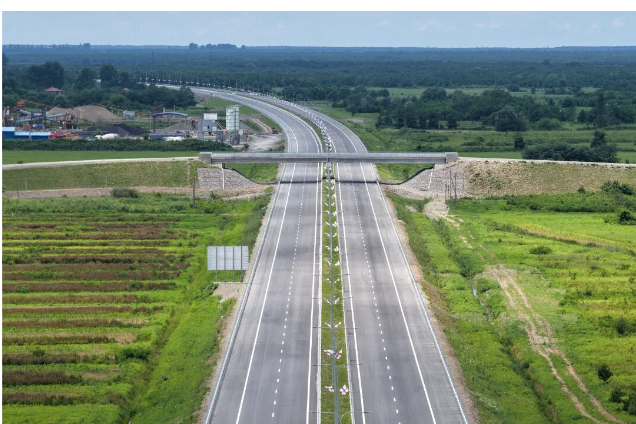
Tbilisi, July 18, 2026 — At the E60 Highway Lot 3 project site in Georgia, the national flags of China and Georgia fluttered side by side. As Georgian Prime Minister Irakli Kobakhidze cut the ribbon and the first convoy slowly entered the newly paved asphalt road, the ancient Silk Road gained a new pulse. The 12-kilometer highway is not only the “last bottleneck” in Georgia’s east-west transport corridor, but also a testament to how a Chinese engineering team has forged a new path through the combined challenges of European standards, complex geology and market monopolies, relying on technological innovation and practical ingenuity. Following the opening, travel time from the Black Sea port of Poti to the capital, Tbilisi, will be reduced by nearly two hours, while around one million residents along the route will bid farewell to urban traffic congestion and the safety hazards posed by railway level crossings.
Figure | Georgian Prime Minister Irakli Kobakhidze delivers a speech
01 Breaking Through a Century-Old European Construction Practice with Homegrown Technology
The entire project is located in the coastal area along the Black Sea, where more than 60 meters of extremely deep soft soil, complex gravel layers and harsh weather with more than 100 rainy days a year combine to create what can only be described as a “geological museum” of extreme conditions. Faced with the limitations of the wet vibro stone column method, a European technique used for decades but constrained by inherent challenges in environmental impact, efficiency and quality, the project team refused to follow conventional practices. Instead, with the characteristic drive of Chinese engineers, it introduced the mature Chinese dry vibro stone column method to the European high-end market.
To address the owner’s concerns, the team established test sections under identical working conditions for direct comparison. Detailed data were obtained through advanced testing methods, including Cone Penetration Testing (CPT) and Standard Penetration Testing (SPT), providing compelling evidence that the dry vibro method outperformed the conventional approach across key indicators, including single-pile bearing capacity, column integrity, soil densification and construction efficiency. Its green advantages — fully water-free operations, zero slurry pollution and zero soil disturbance — also made it the optimal solution for construction in environmentally sensitive areas. Within 11 months, the team completed 159,800 stone columns, significantly shortened the construction period and saved nearly RMB 60 million in costs. These results ultimately convinced the Roads Department of Georgia to designate the dry vibro method as a construction technique for promotion in future local projects.
Meanwhile, in response to geological challenges such as the susceptibility of deep foundations to breakage and positional deviation, the project team developed tailored solutions for each pier and carried out precise optimization. All 256 deep foundation piles, each 50 to 60 meters deep, achieved Class I pile standards. This solid technical performance also enabled the project team to undertake the foundation repair works for Lot 1, providing an opportunity to export its expertise to another project. Chinese construction technology has since established a firm foothold in Europe’s infrastructure landscape.
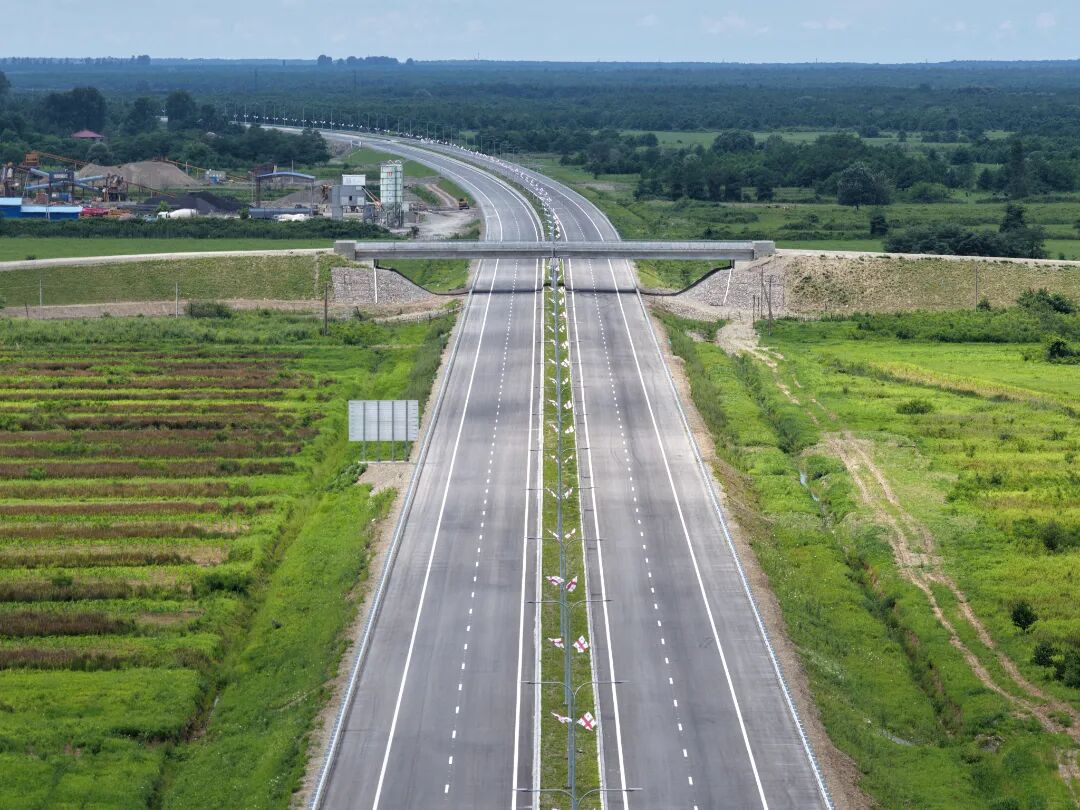
Figure | Project site after opening to traffic
02 Breaking the Overseas Market Monopoly through Self-Reliance and Controllable Supply Chains
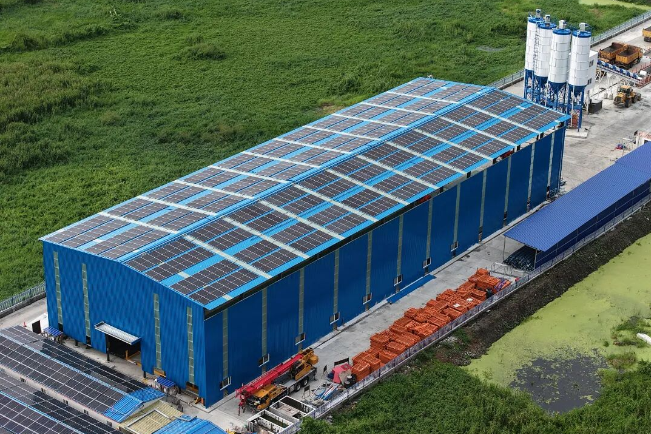
The Georgian infrastructure market has long been plagued by monopolistic subcontracting in the supply of key construction materials such as aggregates and asphalt, excessively high prices and unstable supplies. External contractors could raise prices at will, while high material losses became a major bottleneck constraining project costs and schedules. The project team refused to wait for solutions from outside and took decisive action by establishing three standardized aggregate plants, producing nearly one million cubic meters of aggregates in total. It also built its own asphalt mixing plant and developed asphalt mix designs adapted to the local climate, achieving self-sufficiency and quality control for key construction materials at source and effectively breaking the external monopoly. This self-circulating supply system, integrating production facilities with the asphalt plant, not only kept costs under control but also ensured uninterrupted material supply and consistent quality during the most time-critical stages of construction.
The region’s prolonged rainy season and highly variable weather also put the project team’s organizational capabilities to the test. Effective daytime construction time was often less than four hours, while strong coastal winds and sudden downpours alternated unpredictably, sharply increasing quality risks such as asphalt paving temperature imbalance and pavement joint cracking. The project team formed a dedicated Party-member task force and innovatively adopted an off-peak working model of “material preparation during the day and precision paving at night.” After completing the asphalt wearing course across the full 12-kilometer section, the average pavement evenness remained within 0.6 millimeters, while both compaction and construction acceptance rates reached 100%. At the same time, the project department broadened its international recruitment efforts, bringing in skilled workers from Bangladesh, Turkmenistan, Azerbaijan and other countries to address the shortage of high-level local operators and build a highly efficient, multinational construction team. The dual strengths of an independent supply system and meticulous project organization provided a solid foundation for maintaining steady progress under extreme conditions.
Figure | Project site after opening to traffic
03 Earning the Highest Recognition under European Standards through Defect-Free Delivery
During the final push toward opening, the European Investment Bank and the Roads Department of Georgia established a dedicated acceptance inspection team to conduct multiple rounds of comprehensive and rigorous inspections covering the entire 12-kilometer alignment. More than 10 categories of works, including earthworks and pavement, bridges and culverts, road safety facilities and drainage systems, as well as hundreds of critical locations, were thoroughly examined, with particular attention paid to soft-soil settlement control, pavement durability, structural seismic stability and environmental protection indicators. Under scrutiny comparable to a “microscope,” the settlement of the entire roadbed remained well below the limits stipulated by European standards. With no quality defects, outstanding construction works or environmental issues, and complete and properly prepared project documentation, the project successfully passed the acceptance inspection in full compliance with the Roads Department of Georgia’s “zero-defect” acceptance requirements and was officially cleared for traffic. This performance, which stood up to the most stringent standards, transformed the initial cautious assessment of representatives from the European Investment Bank and experts from the Roads Department into wholehearted recognition.
Figure | Construction team at the opening ceremony
The E60 Highway Lot 3 project has now completed its full construction cycle through an efficient approach of excellence by section and quality improvement across the entire route, bringing an end to chronic congestion caused by the old road passing through urban areas and the safety hazards associated with railway level crossings, while fully easing bottlenecks along Georgia’s east-west international transport corridor. Through technological breakthroughs driven by independent innovation, rigorous commitment to quality and flexible, pragmatic problem-solving, Chinese engineers have established a solid presence on the European high-end infrastructure stage. The project is not only a vivid example of the Belt and Road Initiative moving from vision to reality through China-Georgia cooperation, but also a profound testament to building friendship through craftsmanship and connecting the future through better transport links. It will inject lasting momentum into deeper economic and trade cooperation between the two countries and further strengthen Georgia’s role as a key hub connecting Europe and Asia.