Strengthens HCIG’s Overseas ESG Brand — ESG Management Practices in Overseas Projects
SHICO, HCIG’s principal enterprise for international engineering contracting and international trade, closely follows the Group’s strategic priorities, remains committed to the vision of “Three Highs and Four New Missions,” and upholds HCIG’s “Integrity and Righteousness” corporate culture. In response to the broad geographical coverage, significant differences between countries, and complex compliance requirements of overseas projects, SHICO adheres to the principles of “quality first, green and low-carbon development, adaptation to local conditions, and mutual growth and shared benefits.” It integrates ESG principles throughout the entire project lifecycle, including project development, construction management and operation and maintenance, and has established an ESG management and implementation framework that aligns with international standards, reflects local development needs, and fits the characteristics of its business. Through these efforts, SHICO is building an overseas HCIG brand characterized by green and low-carbon development, compliant operations, and a strong sense of responsibility. The following sections share SHICO’s ESG management practices from five perspectives: environment, society, governance, reflections, and outlook.
01 Environment (E) — “Advancing Green and Low-Carbon Development and Empowering Overseas Ecological Development through Technological Innovation”
SHICO takes comprehensive carbon accounting and carbon control as an entry point, establishing a project-based carbon emissions quantification and control mechanism, setting core indicators such as total carbon emissions and carbon intensity per unit of output value, and achieving full coverage of carbon accounting plans for key projects. Leveraging the Group’s “Suan Tan Bao” digital platform, SHICO implements full-lifecycle carbon emissions data collection, monthly verification and dynamic monitoring, making carbon emissions data measurable, traceable and verifiable, and effectively addressing the fragmented nature of carbon management in overseas operations.
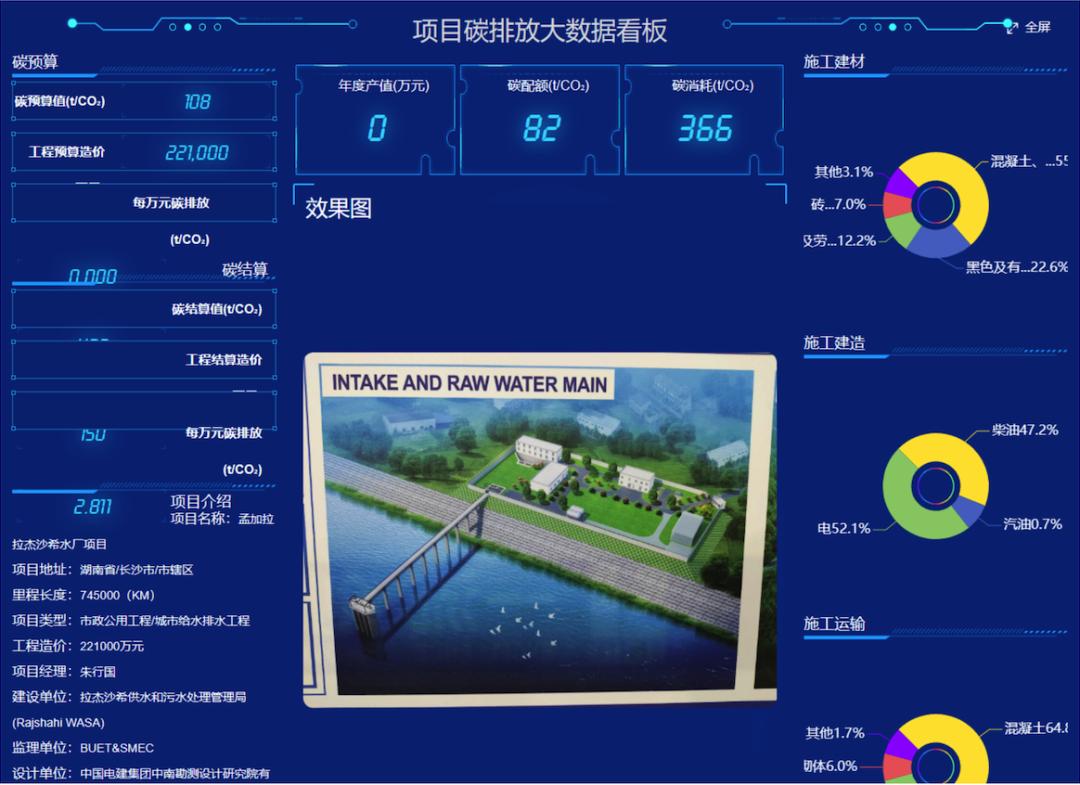
(1) Digitalized and precise carbon control enables routine emissions reduction and efficiency gains. In 2025, the company’s six core overseas projects recorded approximately 59,500 tonnes of carbon dioxide equivalent in cumulative carbon emissions and achieved cumulative emissions reductions of 3,230 tonnes, representing an overall carbon reduction rate of 13.08%. These efforts steadily advanced the dual objectives of green emissions reduction and improved quality and efficiency across overseas projects.
(2) Innovative processes adapted to local conditions create differentiated models for green construction. In developing countries, where industrialization remains relatively limited and construction materials are heavily dependent on costly imports, overseas projects need to make effective use of local resources while achieving the dual goals of cost reduction and environmental protection for sustainable development. At the Rajshahi Surface Water Treatment Plant Project in Bangladesh, for example, the project abandoned conventional reinforcement methods that consume large quantities of materials and innovatively adopted a bamboo-pile and concrete-slab composite reinforcement technique. Verified through theoretical calculations, numerical simulations and field tests, the technique uses locally available, environmentally friendly and renewable bamboo to form an integrated structure with a grid-pattern arrangement and reinforcing steel framework, effectively improving foundation stability and reducing post-construction settlement. The technique significantly reduces the use of aggregates and cement, cuts dust, noise and fuel consumption, and shortens the construction period, delivering multiple benefits in environmental protection, cost reduction and efficiency improvement. It provides a replicable example of green construction for overseas projects in less-developed regions.
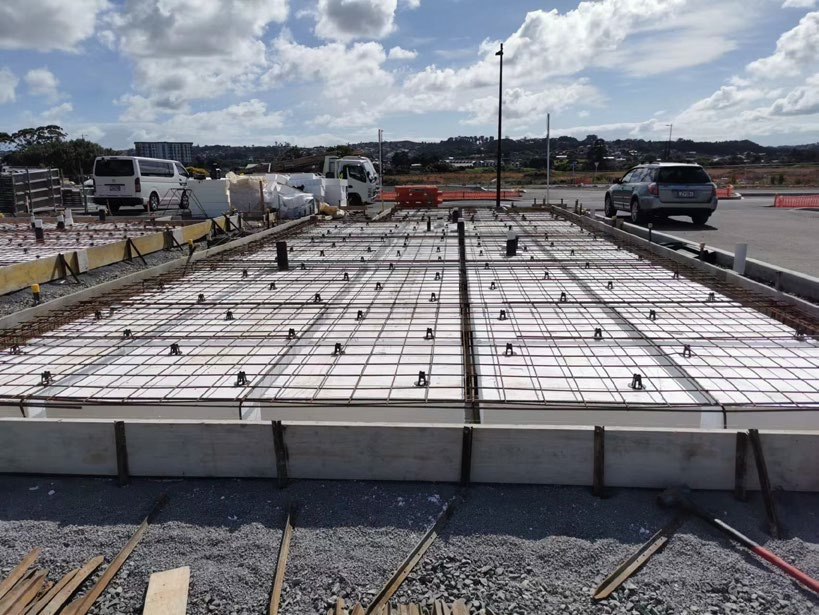
In developed countries, SHICO benchmarks itself against high international standards to enhance quality and achieve excellence. The New Zealand DHB and St George Affordable Housing Projects innovatively adopted a suspended beam-and-slab foundation system using rigid foam blocks. Reinforced concrete beams are installed in load-bearing areas, while foam blocks replace conventional concrete in non-load-bearing areas. This technique reduces concrete consumption by 40%–50% and cuts foundation-related carbon emissions by more than 34.7% over the full lifecycle, substantially reducing carbon emissions from the production, transportation and construction of building materials. The projects successfully passed stringent local environmental reviews, helping the company build core technological advantages as it further develops the high-end green infrastructure market in developed countries.
For national-level foreign aid projects, SHICO fully leverages the advantages of whole-lifecycle project planning. The Algerian Youth Cultural Palace Project, for example, incorporated green construction principles from the design stage. The building layout was optimized to reduce drainage pressure in surrounding areas by 80% and mitigate the overall urban heat island effect. Quantitative daylighting simulations were used to optimize lighting design and reduce energy consumption, while green building materials and high-efficiency energy-saving equipment were selected. During construction, a comprehensive green construction management system was implemented, covering dust and noise control, resource recycling, and digitalized management, creating a high-standard, low-carbon benchmark for foreign aid projects.
(3) Full-factor closed-loop management safeguards local ecological security. SHICO has issued the Measures for the Supervision and Administration of Environmental Protection, incorporating ecological and environmental protection comprehensively into its ESG governance system. It implements full-process closed-loop management of water resources, solid waste and pollutants, while strictly complying with local environmental protection laws and regulations.
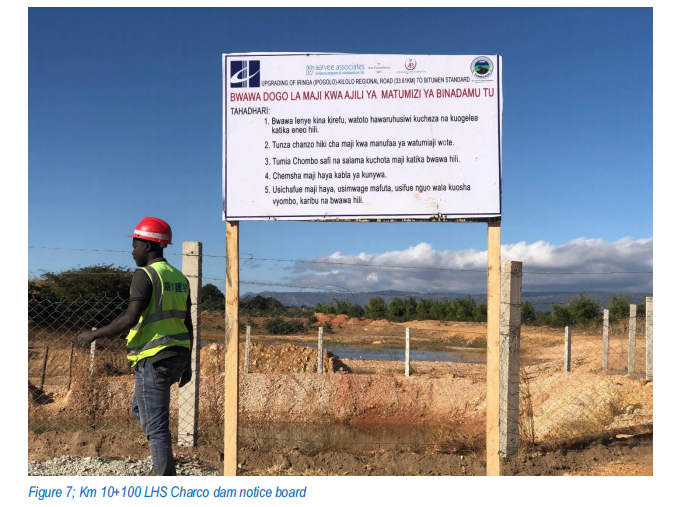
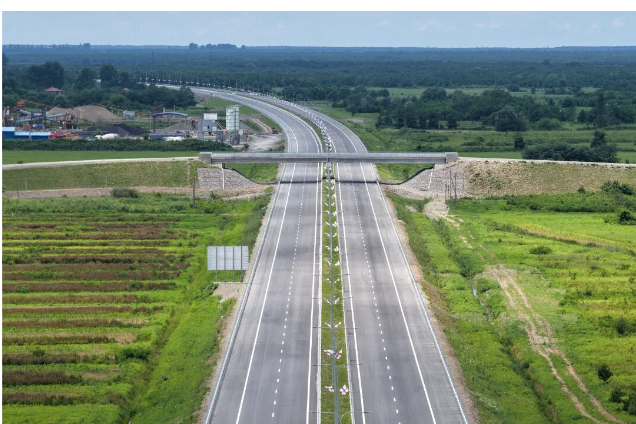
Taking the 33.61-kilometer road upgrading project in Tanzania as an example: First, the project implements waste sorting and resource recovery. Construction waste is crushed and reused as roadbed backfill; domestic waste is sorted for disposal, while food waste is composted and returned to the soil. Hazardous waste is recorded in dedicated registers and handled in compliance by qualified professional organizations. Waste materials generated during construction are cleaned and reused wherever possible to promote resource recycling. Second, the project strengthens ecological protection around water sources. In response to construction activities crossing rivers, dedicated prevention and control measures have been developed, water quality indicators are monitored monthly by professional organizations, and multilingual protection warning signs have been installed to safeguard the river ecosystem on an ongoing basis.
02 Society (S) — “Upholding Coexistence and Shared Benefits and Fulfilling Local Social Responsibilities through Cultural Integration”
SHICO adheres to the people-oriented principle of “building together and sharing together,” with compliant employment, protection of labor rights and interests, local talent development, and community assistance as its core priorities. It works to establish deep-rooted relationships of mutual assistance and shared benefits in local communities and integrate its operations into local social development.
(1) Standardized labor management creates a fair and safe employment environment. SHICO has established a full-lifecycle management and service system for overseas labor. It strictly complies with local labor laws, regulations and policy requirements, recruits employees through open and transparent procedures, respects local customs and cultures, and fully protects the lawful rights and interests of Chinese and local employees, including compensation, leave, occupational health and skills development. It resolutely prohibits violations such as child labor and forced labor. Regular training is provided on safety skills, emergency response and compliant operations, while mechanisms for the development, evaluation and incentivization of local employees are continuously improved to enhance their professional capabilities and safety awareness and foster an equal, inclusive and mutually beneficial overseas employment environment.
(2) Deep engagement in community initiatives precisely supports local livelihood development. Taking into account the social characteristics and project conditions of different countries, SHICO develops tailored community support programs and actively integrates its operations into local development.
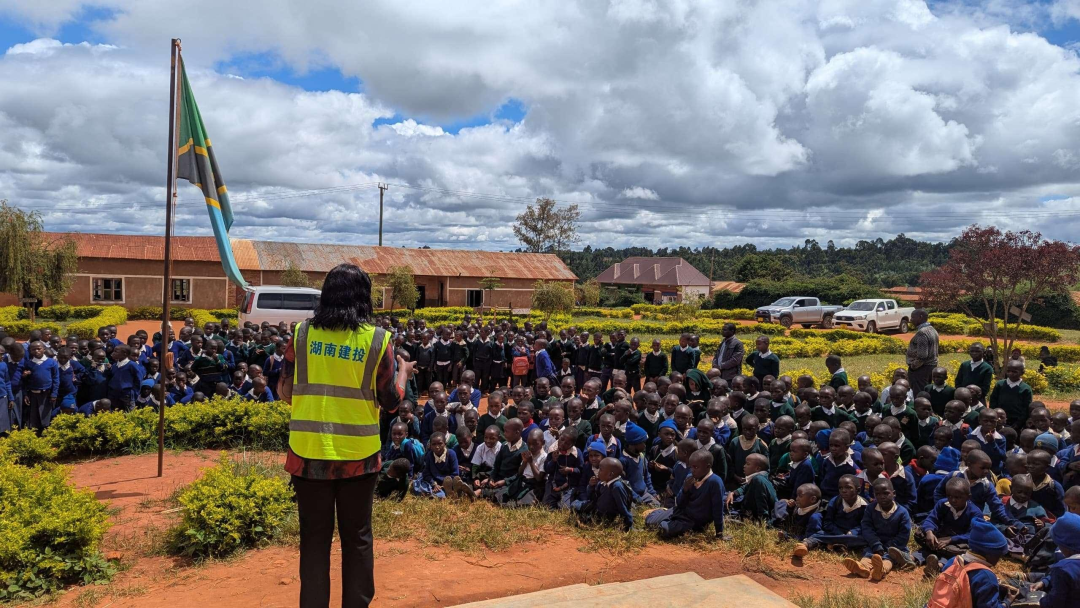
The Tanzania World Bank road project strictly follows the World Bank Environmental and Social Framework and has established a dedicated ESHS team to complete and disclose compliance reports on a monthly basis. In response to gaps in local social governance, the project regularly conducts training on first aid for work-related injuries, communicable disease prevention and control, gender-based violence prevention, and protection against sexual exploitation, while promoting road traffic safety awareness. These efforts not only meet World Bank compliance requirements but also address practical local livelihood needs.
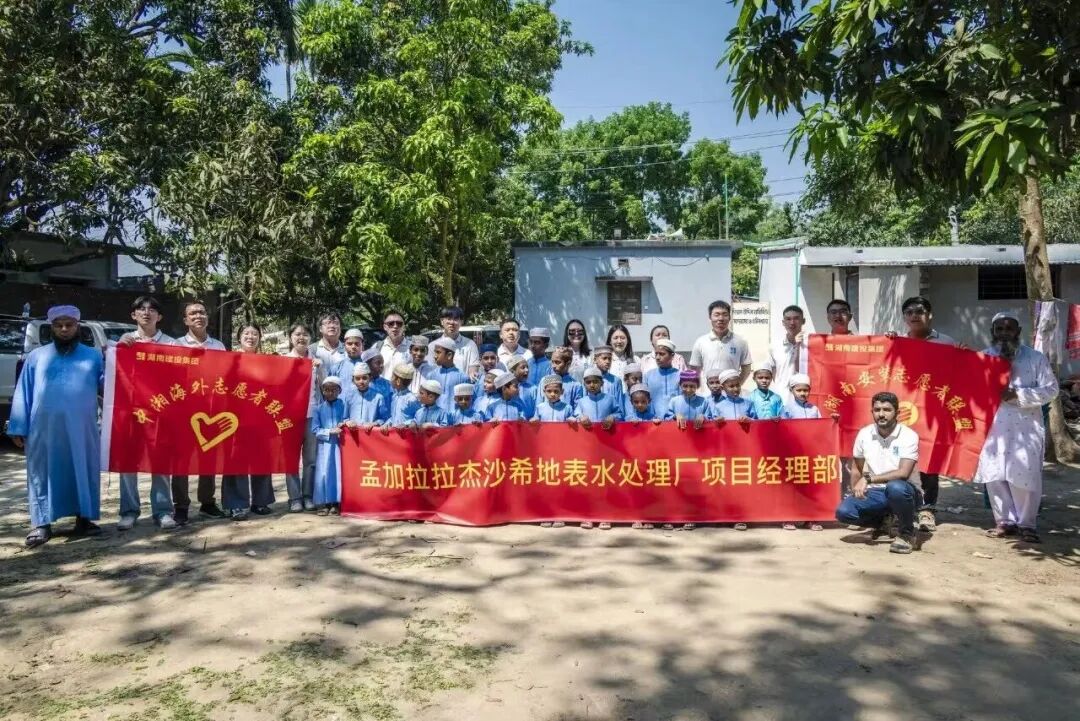
The Bangladesh water treatment plant project takes a long-term approach to local engagement by actively participating in cultural exchanges, community outreach and volunteer activities, continuously strengthening mutual trust and communication between the company and local communities, and building harmonious and stable local relationships that provide a solid community foundation for smooth project implementation and long-term operations.
03 Governance (G) — “Strengthening Corporate Governance and Safeguarding Stable Overseas Operations through a Closed-Loop Management System”
SHICO puts institutional development first and has established a clearly structured, well-defined and fully controllable ESG governance system covering green construction, “dual-carbon” commitments, work safety, employee rights and interests, and overseas responsibilities. High-standard compliance governance provides a solid foundation for the stable and sustainable development of its overseas business.
(1) A three-tier structure enables comprehensive and penetrating ESG management. SHICO has established a three-tier ESG governance system consisting of company-wide coordination, collaboration among management departments, and implementation by overseas entities and project departments, with clearly defined responsibilities and assessment standards at each level. It has connected the entire process from data collection and dynamic monitoring to analysis and consolidation, corrective action and optimization, and public disclosure, ensuring that ESG requirements reach every project, position and construction activity and that ESG management has no blind spots or gaps.
(2) Full-lifecycle compliance control safeguards the bottom line of overseas operations. In response to complex and rapidly changing country-specific policies and compliance risks overseas, SHICO has established a closed-loop mechanism covering due diligence before entry, controls during implementation, and corrective action afterward. At the market-entry stage, partner qualifications are subject to strict scrutiny, while dedicated risk assessments are conducted for high-risk countries. During construction, changes in local policies are tracked dynamically, risk registers are updated in real time, and potential risks are promptly addressed. During project closeout, dedicated inspections are conducted jointly with discipline inspection and audit functions, with issues tracked through dedicated registers and closed out upon resolution, ensuring that risks are comprehensively addressed.
(3) Strict integrity risk controls foster a clean and ethical business environment. Focusing on high-risk areas such as overseas bidding and procurement, materials supply and fund payments, SHICO has established mechanisms for tiered approval, checks and balances, and full-process record keeping, with a strict prohibition on commercial bribery and the improper transfer of benefits. Regular integrity and ethical conduct training is provided to Chinese and local employees, internal and external reporting channels are kept open, and a zero-tolerance approach to integrity risks is maintained. These efforts aim to build transparent, clean and trustworthy projects and establish a strong reputation for HCIG’s overseas operations based on integrity.