HCIG Commended and Praised by the Georgian Prime Minister for the E60 Expressway LOT 3 Project
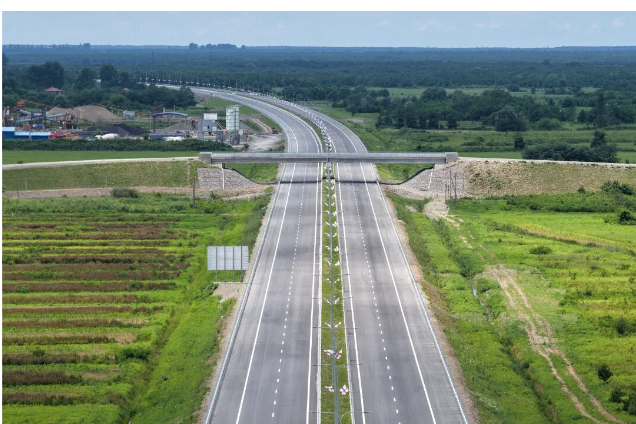
On December 17, on this ancient land bridging Europe and Asia, the first 6-kilometer section of the E60 Expressway LOT 3 Project—constructed by Hunan Road & Bridge under HCIG—was officially opened to traffic. Georgian Prime Minister Irakli Kobakhidze led a delegation including Minister of Regional Development and Infrastructure Revaz Sokhadze, Chairman of the Roads Department Levan Darakhvelidze, and other senior government officials to the site, where they joined their Chinese counterparts to witness this milestone achieved through shared wisdom and hard work.
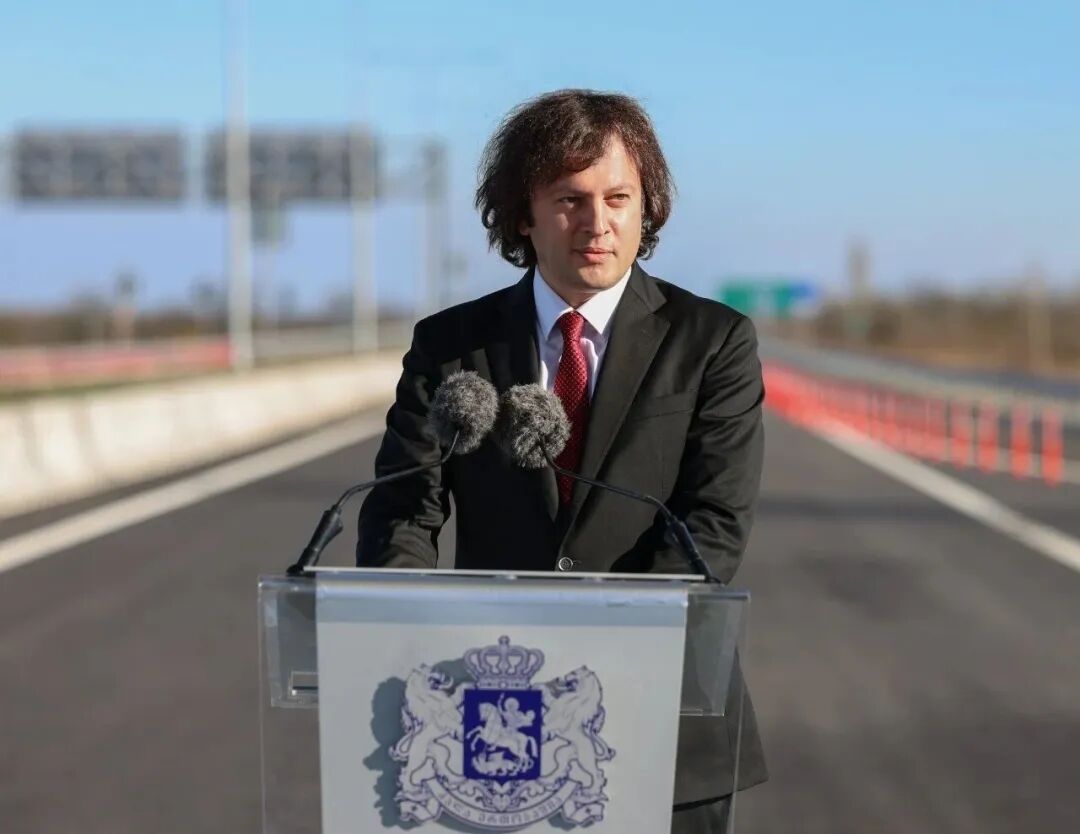
“This road opening is not only an acceleration of transport efficiency, but also a solid step forward in Georgia’s modernization,” Prime Minister Kobakhidze said in a nationally televised address. “I sincerely thank the Chinese builders for their professionalism and dedication. What you have delivered is not just infrastructure, but hope for development.” Speaking to the camera and local residents, he extended heartfelt appreciation to the Hunan Road & Bridge project team.
In his subsequent remarks, Minister Sokhadze underscored the strategic importance of the E60 Expressway as Georgia’s “No. 1 national project.” The smooth progress of the LOT 3 section represents a major breakthrough in the country’s infrastructure development. He praised the Hunan Road & Bridge team for their outstanding technical expertise and determination in overcoming challenges, noting that this road will fundamentally reshape regional development, serving as a vital artery linking urban and rural areas, boosting tourism, and energizing the economy.
Technical Breakthroughs: Applying Chinese Expertise to Solve a Global Soft-Soil Challenge on the Black Sea Coast
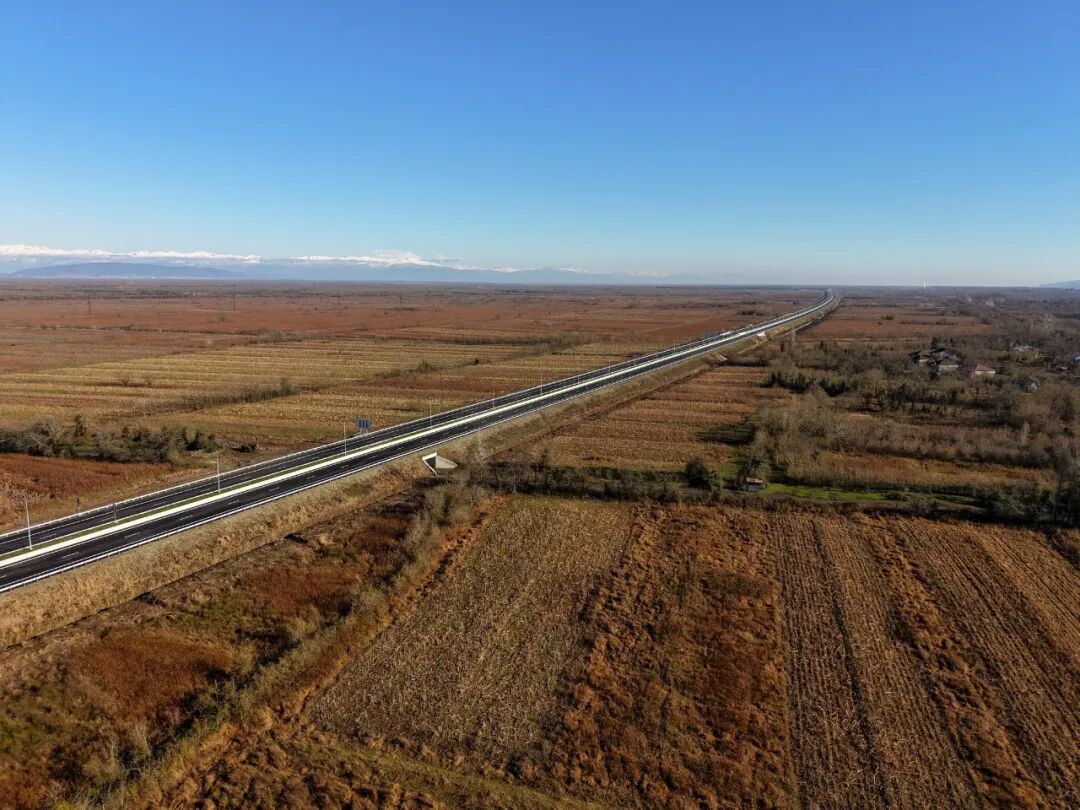
The LOT 3 project is located along the Black Sea coast in an area with extremely deep soft soil foundations, reaching depths of over 60 meters. Under such geological conditions, the traditional European “water jetting method” involves long construction periods and difficult settlement control, with neighboring projects taking as long as 6 to 10 years to complete. After in-depth technical analysis, the project team identified low efficiency, high cost, and severe slurry pollution associated with this method, and decisively adopted China’s mature “dry vibroflotation” gravel pile technology instead.
Through proactive coordination with Georgian authorities and supervision engineers, the team promoted comparative testing programs. Comprehensive testing, including static and dynamic probing, demonstrated that the dry vibroflotation method significantly outperformed the original process in bearing capacity, pile integrity, and environmental performance, achieving true zero wastewater discharge. This innovation successfully won the confidence of all stakeholders. Ultimately, the project completed the installation of 159,800 gravel piles within just 11 months, saving nearly USD 8.56 million in costs. The technology has since received official recognition from the Georgian Roads Department, marking the successful overseas application of Chinese technical standards.
In bridge foundation works, the original design specified precast pipe piles, which posed high risks of breakage and misalignment in complex sand and gravel layers. Based on detailed geological investigation data, the team proposed switching to impact-drilled cast-in-place piles. By strictly implementing refined management under a “one pier (or abutment), one solution” principle, all 256 piles—each 50 to 60 meters deep—achieved the highest quality rating. This optimization ensured safety while saving an additional USD 0.71 million and further strengthened trust from the Georgian side. As a result, the team was designated to undertake the repair of 248 pile foundations for the LOT 1 section.
Resource Integration: Breaking Multiple Overseas Market Monopolies through Independent Innovation
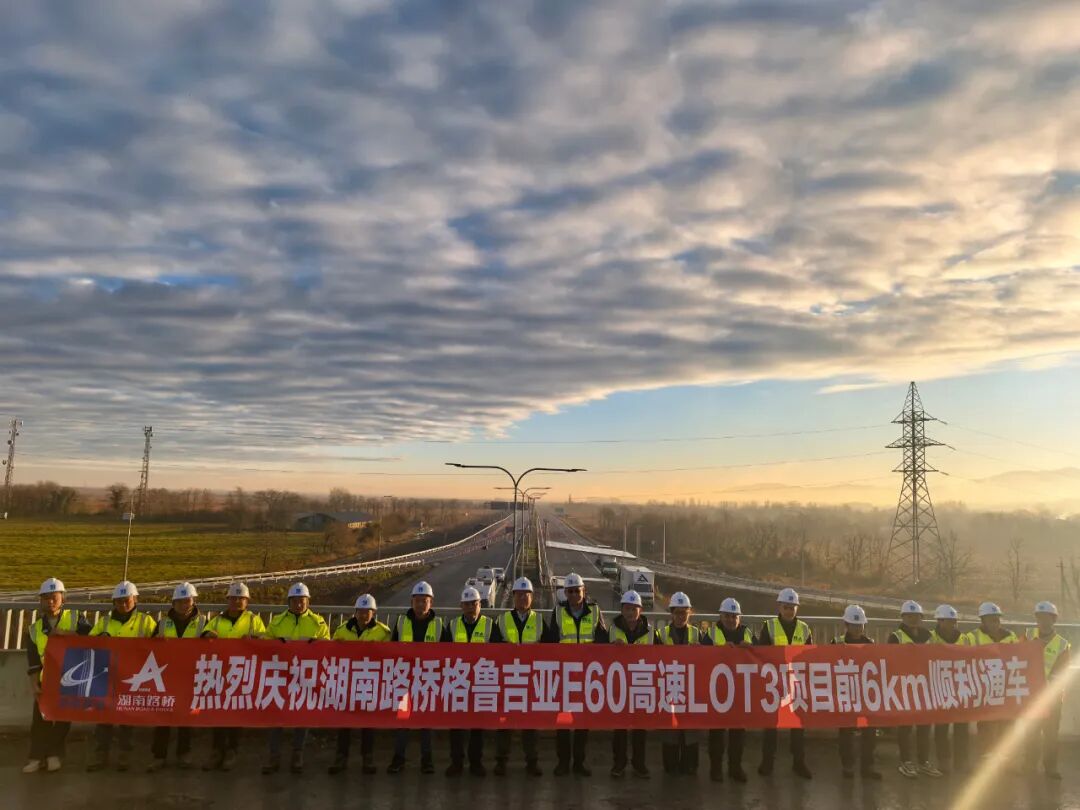
The project faced dual challenges of local labor shortages and monopolized construction material markets. With many skilled local workers seeking employment in Europe, recruitment became difficult and labor costs surged, severely constraining project cost control and schedule. In response, the project adopted a multinational labor strategy, introducing skilled and stable workers and equipment operators from Bangladesh, Turkmenistan, Azerbaijan, and other countries. This approach effectively filled labor gaps, reduced costs, and significantly improved productivity.
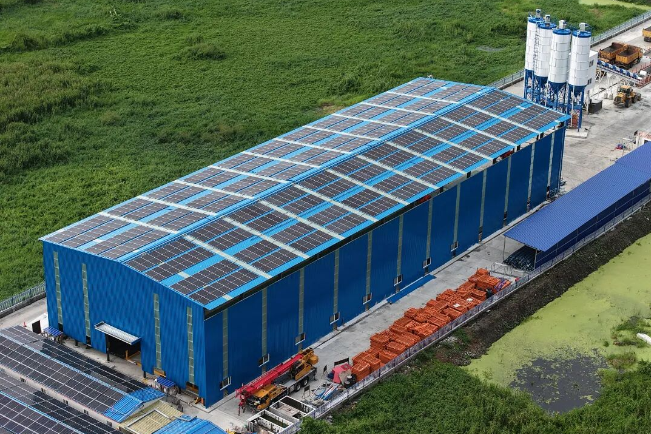
At the same time, nearby quarry operators leveraged monopolistic positions to raise aggregate prices by 40 percent, while asphalt subcontracting costs were excessively high with serious material losses. Together with the China–North & Central Asia Regional Center, the project decisively advanced supply chain self-reliance. On one hand, it secured its own raw material sources and established three gravel quarries, producing nearly one million cubic meters of aggregates to stabilize prices and ensure supply. On the other hand, it built a standardized asphalt mixing plant, developed mix designs tailored to local climatic conditions, and strictly controlled material losses in accordance with quotas. This comprehensive approach eliminated dependence on external subcontractors and gave the project full control over quality, cost, and schedule.
A Path of Shared Success: Revitalizing a Core Development Artery through a Landmark Project
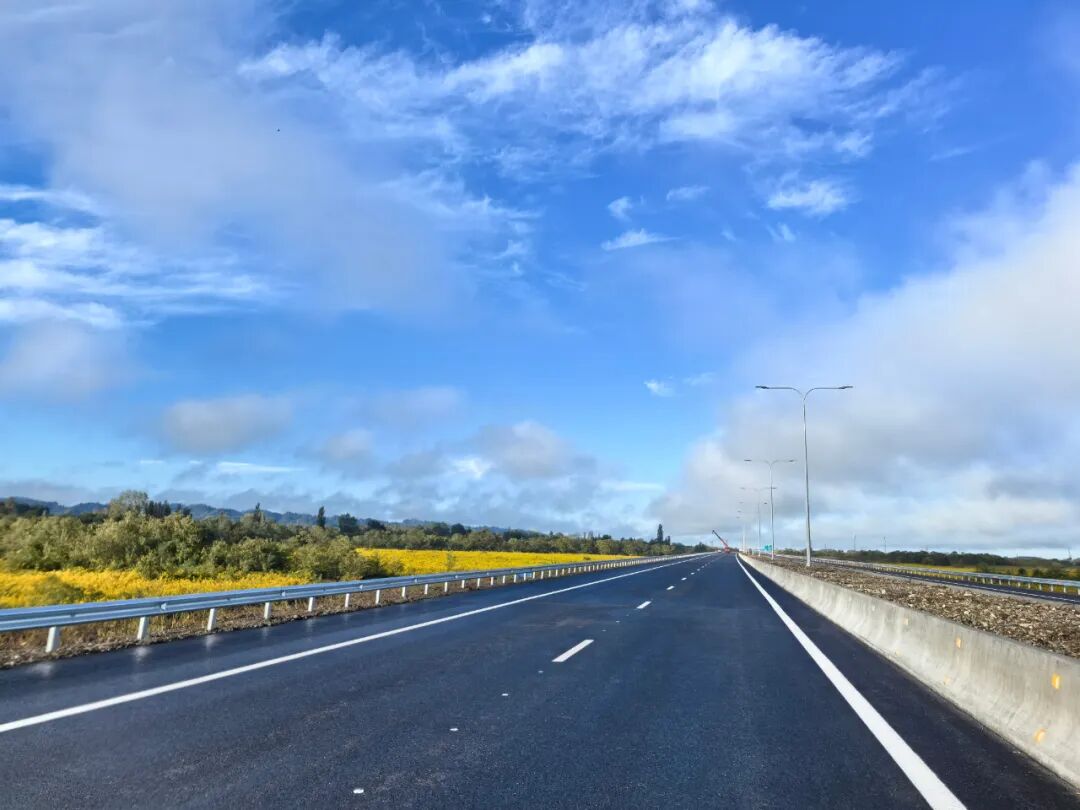
The opening of this section has brought an end to the long-standing issues of old roads cutting through urban areas, mixed traffic of vehicles and pedestrians, and chronic congestion. The new expressway bypasses the city, avoids railway level crossings, and restores safety and efficiency for local residents. Winding between mountains and sea, this modern expressway is more than a transportation corridor—it is a tourism route, an economic lifeline, and a development engine. It will draw global attention to the stunning landscapes of the Black Sea coast and inject strong momentum into Georgia’s prosperous future.
After the opening ceremony, Minister Sokhadze encouraged the Hunan Road & Bridge team to maintain their momentum and accelerate construction of the remaining sections. Within the grand vision of the Belt and Road Initiative, Hunan Road & Bridge has, with craftsmanship and ingenuity, left a solid and radiant Chinese imprint amid Georgia’s green mountains and blue seas.